Blog
Maharashtra’s Queen of Silks: Paithani
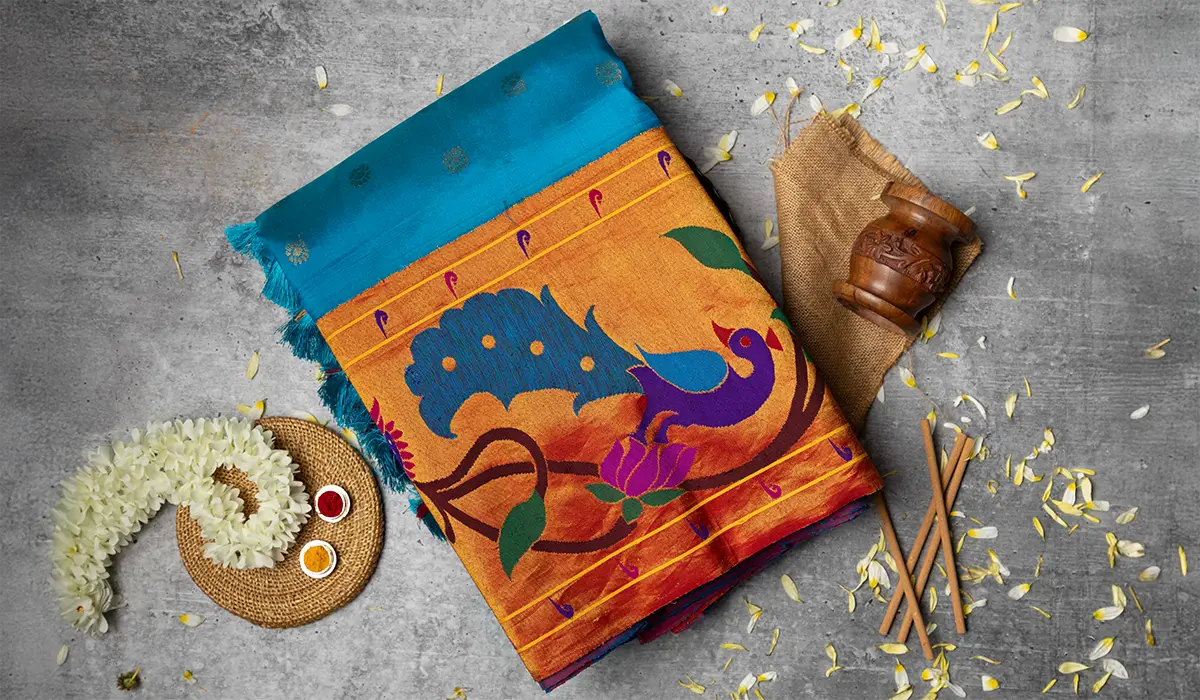
A Paithani sari is not merely an apparel but it is a living legacy. Woven thread by thread, enriched with centuries of artistry and cherished as a symbol of pride, the Paithani stands as one of India’s most iconic handloom masterpieces. Its shimmering silk, pure zari and enchanting motifs have draped queens, brides and women of grace for generations.
If you’ve ever admired a Paithani or are planning to own one, this refined guide will take you through its history, craftsmanship, styles, motifs, and the art of choosing an authentic piece.
The Royal Origin of Paithani
The story of Paithani begins more than 2,000 years ago in the ancient town of Paithan (Maharashtra). During the Satavahana era, Paithani weaves were sought after across India, Persia and even Rome. These saris were symbols of wealth and power, crafted with pure silk and real gold threads.
Over centuries, Paithani weaving evolved yet retained its original charm: exclusivity, intricate design and unparalleled craftsmanship. Today, Paithan and Yeola remain the strongest hubs preserving this royal tradition.
Why Paithani Is Called the ‘Queen of Silks’?
Paithani is celebrated for its luxurious appeal and unmatched artistry. Its distinctive features include:
- Pure Mulberry Silk
The body of the sari is woven with fine mulberry silk known for its soft texture and natural sheen.
- Pure Zari or Tested Zari
Traditional Paithanis used real gold and silver zari.
Modern versions use either:
- Pure Zari (premium, heirloom grade)
- Tested Zari (affordable and durable)
- Handwoven Tapestry-Style Pallu
The pallu is the heart of the Paithani. Each motif is meticulously woven not embroidered, using a textile technique that takes weeks to complete.
- Signature Dual-Tone Colours
Paithani weavers masterfully blend warp and weft threads to create shimmering dual-tone effects giving the sari a magical glow.
The Art of Weaving a Paithani
A single Paithani saree can take 15 days to several months, depending on the complexity of the design.
The process includes:
- Dyeing silk threads
- Setting the loom
- Creating borders
- Weaving the body
- Handcrafting the pallu motif
- Finishing the edges
No two Paithanis are identical; each one carries the individuality of the artisan.
How to Identify an Authentic Paithani?
With machine-made imitations flooding the market, it’s crucial to know the markers of a genuine Paithani:
- Identical look on both sides of the pallu and border
- No loose threads or cut-work motifs (everything is woven)
- Soft, rich silk that feels luxurious
- Borders and pallu are woven as part of the sari, not stitched separately
- Motifs appear crisp and detailed, not printed or patched
A handcrafted Paithani will always have minor variations, beautiful imperfections that reflect true artistry.
A Paithani sari is a culture, devotion and history woven together. It is a piece of art that elevates tradition with every drape. Owning a Paithani means owning a treasure that becomes richer with time, retaining its poetry, charm and royal appeal for generations to come.